
Boiler and Hot Water Heater Venting Design Presentation Oct 22nd, 2026
Venting design has always been a prediction, and the thing we are predicting has stopped holding still. Every section of this hour is one more way the operating point moves away from the single steady-state condition our design methods were built to evaluate — fan-assisted appliances removed the draft hood, modulation moved the operating point continuously, condensing temperatures took the buoyancy away, and the answer the industry offered for Category IV was a certification envelope rather than a calculation. Mechanical draft is the design response to all four.
Combating Overdraft: The Key to Balanced Boiler Performance Sep 17th, 2026
More Draft Isn't Always Better: Understanding Boiler Overdraft Aug 31st, 2026
On the Road with ENERVEX Aug 5th, 2026

ENERVEX closed out July with two key stops on the data center circuit, connecting with industry leaders in Dallas and San Jose. From booth conversations to an expert session on evolving SCR technology, the events highlighted growing demand for reliable, compliant, and fully integrated exhaust solutions.
The 20-Year Decision Disguised as a Routine Fan Replacement Aug 5th, 2026

A routine rooftop fan replacement may look like a simple maintenance decision, but it can lock a building into unnecessary operating costs for the next fifteen to twenty years. Because crane access, labor, and rooftop disruption are already part of the replacement, this moment creates a rare opportunity to upgrade to demand-based exhaust at a relatively small incremental cost.
By modulating airflow to match actual demand, buildings can reduce energy waste, improve performance, and achieve a faster return on investment.
BOMA International 2026 – The ENERVEX Review Jul 1st, 2026
Three Signs Your Building's Shared Exhaust Is a Hidden OPEX Drain Jun 8th, 2026
Pulp and Paper Mills: How to Recover and Repurpose Heat Without Rebuilding Your Plant May 6th, 2026
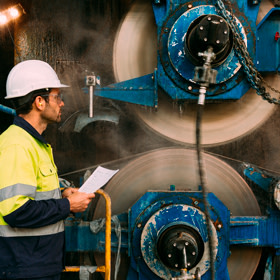
Pulp and paper mills use large amounts of heat for pulping, evaporation, and paper drying, but much of that energy is lost through exhaust air, wastewater, condensate, and flue gas.
ATW WHR recovers this wasted heat and reuses it for process water, boiler makeup, building heat, and other hot water needs. It’s a simple way for mills to reduce fuel use without disrupting production.
Recovering HVAC and Ventilation Waste Heat in Apartments and Condominiums Apr 8th, 2026
How Airports Can Recover and Repurpose the Waste Heat They Currently Discard Mar 5th, 2026

Airports are complex energy environments. A single terminal may cool thousands of passengers, refrigerate catering, ventilate fuel fumes, and heat jet bridges simultaneously. While some areas burn energy to produce heat, others are actively rejecting heat outdoors. Large refrigeration plants, chillers, and HVAC systems constantly remove thermal energy and expel it through condensers or cooling towers—often at the same time other parts of the airport are generating new heat with boilers or electric systems.


