

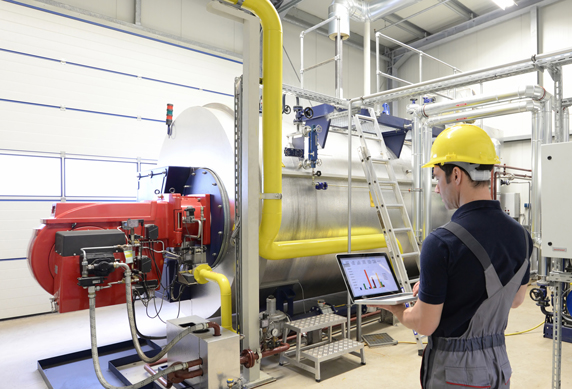
Boiler venting is a balancing act: enough draft to remove combustion products safely, but not so much that it disrupts combustion or sends useful heat up the stack. When boiler venting problems come up, the first concern is usually insufficient draft, for good reason, since too little draft can produce visible, urgent symptoms like unstable combustion and flue-gas spillage. But draft isn't a “more is better” variable. Excessive negative pressure creates a different set of problems, affecting burner performance, heat transfer, fuel use, and equipment operation. The goal isn't maximum draft. It's controlled draft within the range the boiler, burner, and venting system were designed for.
Draft is a pressure difference that moves combustion gases through an appliance and venting system. In a naturally drafting chimney, hot flue gases are less dense than the cooler air around the chimney, and that buoyancy creates the pressure differential that pulls gases upward and out of the building. It's typically measured in inches of water column.
Available draft isn't constant. Chimney height, flue-gas temperature, outdoor temperature, wind, firing rate, vent resistance, and building pressure can all shift the pressure relationship an appliance experiences. A system that looks stable in mild weather or at one firing rate can behave differently on a cold, windy day or when building exhaust fans are running.
Insufficient draft can prevent the venting system from moving combustion products as intended, leading to flue-gas spillage, flame rollout, condensation, soot, or unstable combustion. It's worth separating venting from combustion chemistry, though: low draft doesn't automatically mean carbon monoxide, but inadequate air or poor burner setup can produce soot, smoke, unburned fuel, and CO. That's why draft readings should be evaluated alongside combustion-analyzer data rather than treated as a standalone diagnosis.
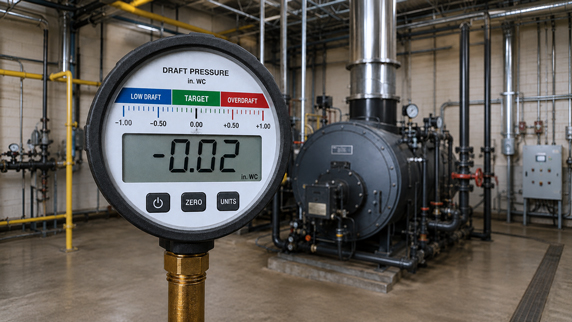
Excessive draft is the less-discussed half of the equation. ASHRAE notes that too much available draft can pull excessive combustion air into a burner system, reducing efficiency and potentially causing flame lifting or other combustion-performance problems. In practice, that pattern shows up as flames pulled off the burner head, unstable or lean combustion, or flame drawn back into a boiler's fire-tube passages, any of which can produce surging or nuisance shutdowns. The exact effect depends on burner and boiler design. Excessive draft shouldn't be assumed to cause the same symptom on every appliance, and it shouldn't be diagnosed from flame appearance or fuel consumption alone. What matters is whether actual draft pressure and combustion performance fall outside the manufacturer's specified range.
Overdraft is sometimes treated as identical to excess combustion air. The two are related in some systems, but they aren't the same measurement. The more defensible argument is that unnecessary flue-gas flow and elevated stack losses carry energy out of the system instead of into the water, steam, or process load.
The U.S. Department of Energy identifies stack temperature and flue-gas oxygen or carbon dioxide as the primary indicators of combustion efficiency, and explains that excess air increases flue-gas flow and, with it, heat loss up the stack. Its widely cited rule of thumb: boiler efficiency may improve by about 1% for every 15% reduction in excess air, or every 40°F reduction in stack-gas temperature. That shouldn't be read as a direct “overdraft savings” formula. Reducing draft by a given amount doesn't guarantee a proportional efficiency gain. But it illustrates the underlying point: when more heated gas than necessary leaves through the stack, useful energy leaves with it.
None of these alone prove an overdraft problem. They're reasons to measure, not diagnose by observation:
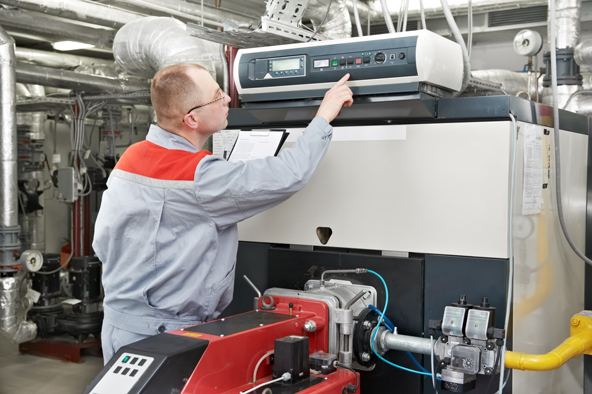
There's no universal “correct” draft setting. The required pressure comes from the boiler and burner manufacturer's specifications and the engineered venting design. A proper assessment measures draft at the locations the manufacturer specifies, across the appliance's operating range (low fire, high fire, and intermediate on modulating equipment), and compares readings across changing weather if that's when problems appear.
Draft readings should be paired with combustion data. EPA's boiler tune-up guidance calls for observing flame pattern and burner condition while measuring flue-gas oxygen, carbon monoxide, and final flue-gas temperature. Together, these measurements distinguish a draft-control problem from burner tuning, fouling, or heat-transfer issues. The entire venting path matters too: chimney height and diameter, fittings, draft-control devices, combustion-air supply, and mechanical-room pressure can all affect what the boiler sees.
Where the appliance and vent design permit it, a barometric draft regulator limits how much chimney-induced negative pressure reaches the boiler. When chimney draft exceeds the setpoint, the regulator opens and admits dilution air, increasing vent-system pressure loss and reducing the draft the appliance sees. It's a proven approach, but it has limits: it must be correctly sized and adjusted, and it responds passively to available draft rather than actively commanding a pressure-control device.
For systems with large swings in operating conditions, multiple appliances, tall chimneys, or tighter pressure-control requirements, mechanical draft control, using fans, modulating dampers, and pressure controls that actively maintain a target draft, can offer tighter control. Neither approach is a default. The engineering objective is the same either way: maintain the pressure conditions the appliance requires while keeping combustion stable across its full operating envelope.
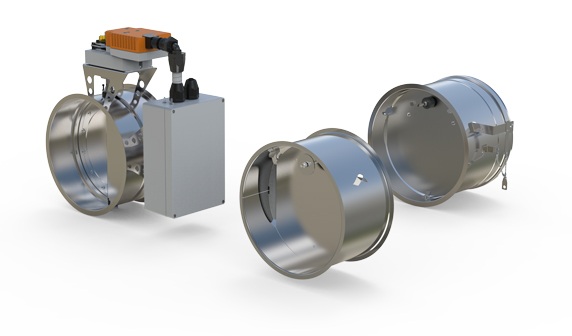
ENERVEX offers both approaches for commercial and industrial applications. The BDR barometric draft regulator line is designed to maintain proper draft during excessive-draft conditions, while ENERVEX's mechanical draft and modulating overdraft-control systems use fans, dampers, and pressure controls to hold target pressure as demand changes. Overdraft isn't a single-component problem. A small, stable system may call for one approach, while a tall chimney, multiple boilers, or a highly variable pressure environment may call for another. The starting point is always the boiler and burner requirements, measured system behavior, and the engineered venting design.
ENERVEX is hosting a 30-minute webinar, Combating Overdraft: The Key to Balanced Boiler Performance, on September 17, with sessions at 11 AM and 2 PM, covering how to recognize, diagnose, and correct too little draft and overdraft conditions before they become performance problems or service calls. Register now!