

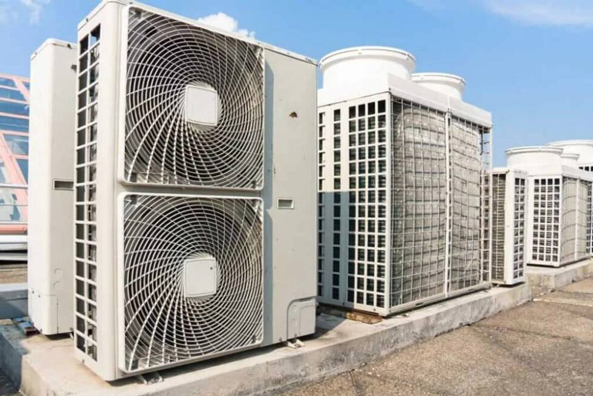
Most and condo buildings lose a surprising amount of energy not because of aging equipment or poor insulation, but because heat is deliberately expelled into the atmosphere. This is a basic requirement of how HVAC systems function, as refrigeration cycles need somewhere to dump heat. Modern heat recovery systems can capture this thermal energy and put it to use a second time for space heating, domestic hot water, or other building needs.
In dense apartment and condominium buildings, this strategy can reduce energy consumption, cut operating costs, and help property owners meet increasingly strict carbon regulations.
Waste heat recovery reduces costs at every level of a building – for the owner, for residents, and for the mechanical systems.
Buildings account for roughly 40% of U.S. carbon dioxide emissions according to the Environmental and Energy Study Institute, and regulators are paying close attention to this issue. Cities including New York, Boston, Seattle, and Vancouver have introduced building performance standards requiring large residential buildings to reduce their emissions intensity over time, with financial penalties for those that fall short.
There's also a financial incentive. Under the federal Section 179D deduction, building owners who install qualifying energy-efficient HVAC and hot water systems can claim deductions ranging from $0.50 to $5.00 per square foot, depending on energy savings achieved and whether prevailing wage requirements are met. Developers building new multifamily construction may also qualify for the Section 45L tax credit, worth up to $5,000 per dwelling unit for buildings meeting applicable energy efficiency standards.
Note: Both programs have been recently modified, so consult a tax professional for current eligibility requirements.
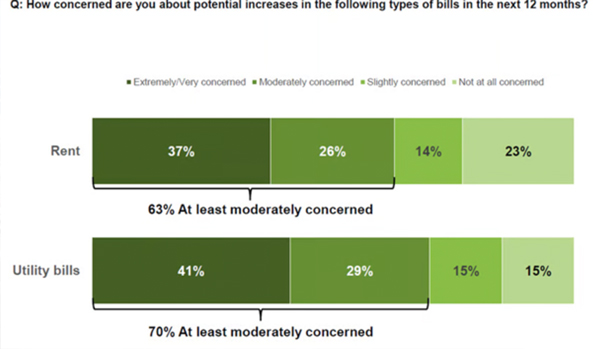
Renter finances are under real pressure. The number of renter households spending more than 30% of their income on rent and utilities rose by 2 million in just three years to a record high of 22.4 million. Average monthly utility costs for renters climbed 20% in just four years (2021-2025).
Instead of each BTU of gas or electricity doing one job and leaving, recovered heat does a second job before it exits the building. That reduced load on primary systems means lower utility costs, which in buildings where utilities are included in rent or HOA fees, can translate to lower costs for the resident, depending on how utilities are structured.
Buildings with heat recovery systems tend to maintain more consistent temperatures and humidity levels, because they're conditioning incoming air before it enters occupied spaces rather than dumping unconditioned outdoor air into corridors and units.
There's also a resilience argument. Buildings that run efficient, lower-load mechanical systems experience less equipment stress, fewer breakdowns, and more predictable maintenance cycles. For residents, that means fewer disruptions.
To understand the value of heat recovery, it helps to understand where the waste heat is coming from: how much energy typical residential buildings consume and where that energy ultimately goes.
Large residential buildings contain expansive HVAC systems and centralized mechanical systems such as:
All of these systems transfer heat as part of their normal operation.
Ventilation systems in multifamily buildings continuously remove stale air from bathrooms, kitchens, and corridors, exhausting large volumes of conditioned air to the outdoors. In winter, this air is typically heated to 68–72°F (20–22°C), meaning a steady stream of usable thermal energy is leaving the building.
ENERGY STAR estimates that air leakage and ventilation losses account for 25–40% of heating and cooling energy in a typical residence. In multifamily properties, this loss occurs less through leakage and more through controlled, code-required exhaust airflow—operating continuously across dozens or hundreds of units. In a 200-unit building, that represents a large, predictable, and ongoing stream of recoverable energy leaving the building every hour of every day.
This is the most common and cost-effective application in residential buildings. Cold water entering the building (typically around 50°F) gets routed through a heat exchanger before reaching the boiler.
Recovered heat can raise that incoming water often into the 90 –110°F range, meaning the boiler only needs to close a 20–30 degree gap instead of a 70–90 degree one. In a building consuming 10,000–20,000 gallons of hot water per day, the reduction in boiler load is significant.
Recovered heat can feed directly into hydronic heating loops – the same piped hot water systems that serve radiators and fan coil units throughout the building. It won't replace your primary heating plant, but it reduces how often and how hard that plant has to run. In buildings with radiant floor heating, the water temperature requirements are lower, which makes recovered heat an even better fit.
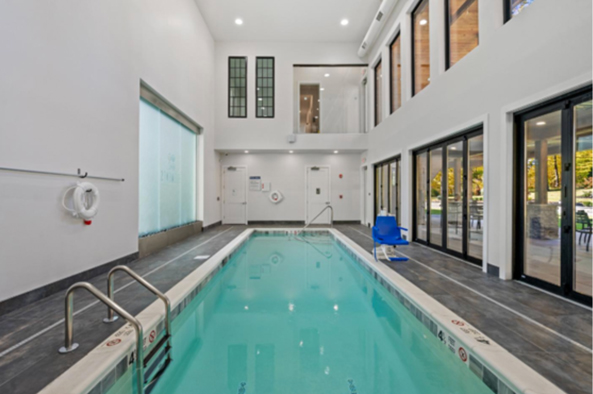
Heating Buildings with swimming pools, hot tubs, or spa facilities are particularly good candidates for waste heat recovery. Pools require constant low-grade heat to maintain temperature — exactly the kind of load that recovered heat handles well. Rather than running a dedicated pool heater continuously, recovered heat from HVAC systems can carry much of that load.
In buildings with steam or hot water boilers, recovered heat can preheat the feedwater before it enters the boiler. Even modest preheating — raising feedwater from 50°F to 80°F — measurably reduces fuel consumption and thermal stress on the boiler, extending equipment life.
The buildings that perform best in the coming years will be the ones that treat energy not as a fixed cost, but as something that can be managed, reused, and optimized. Even when a specific solution is outside your immediate scope, understanding where energy is lost and how it can be captured, has become part of making better building decisions.