
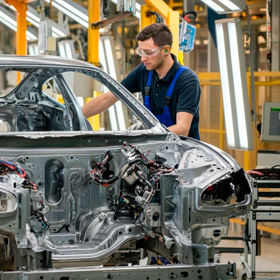
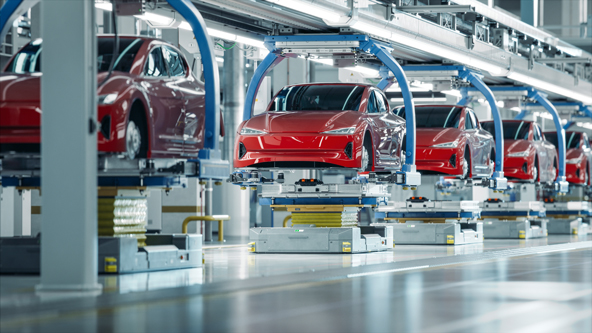
The automotive industry manufactures over 90 million vehicles annually. These vehicles connect people and power economies all around the world. A single assembly plant has multiple heat-intensive processes, including foundries, paint shops, and engine testing. But this immense scale comes with heavy energy demands and a large environmental footprint. The energy required to produce just one passenger vehicle is approximately 42 megajoules per kilogram. To put that in perspective, producing a 1,500kg sedan is equivalent to the electricity needed to power an average American home for almost 2 years.
Global energy markets are continually fluctuating and many carbon reduction mandates are in effect or will be soon. Car manufacturers are looking for solutions that tackle multiple challenges at once.
Can manufacturers cut carbon emissions and costs, without impacting operational stability? The answer is yes – and it involves a technology called air-to-water waste heat recovery.
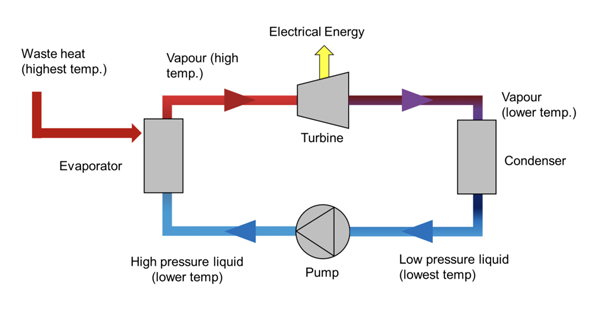
Waste heat is thermal energy that is currently being vented out of exhaust stacks and lost to the atmosphere. Air-to-waste heat recovery (WHR) is the process of intercepting that hot air and transferring its energy into a water-based system for reuse.
In industrial settings, this typically involves a heat exchanger where hot exhaust gases or warm process air passes over a series of coils containing water. The heat is transferred from the air stream to the water, increasing the water's temperature.
This heated water can then be circulated and utilized for various purposes, effectively recycling energy that would otherwise be wasted. The beauty of this technology is its ability to convert a readily available, often overlooked byproduct (waste heat) into a valuable energy resource.
The most significant advantage lies in its contribution to decarbonization. By reducing the demand for primary energy sources (like natural gas or electricity generated from fossil fuels) to produce heat, air-to-water WHR directly lowers greenhouse gas emissions.
The European Commission actively advocates for waste heat recovery, identifying it as a cornerstone for achieving climate targets. Their research highlights that integrating these technologies can help drive a 20% reduction in greenhouse gas emissions compared to 1990 levels.
For an automotive plant, this could translate into thousands of tons of CO2 saved annually, helping them meet increasingly stringent environmental regulations and corporate sustainability goals.
Energy is a major operational expenditure. Recovering waste heat means less fuel needs to be purchased to generate the required process heat. A study published in Applied Sciences showed that WHR can yield energy efficiency improvements of up to 69%. This translates into a huge reduction in specific energy costs.
For manufacturers that spend millions annually on energy, a reduction like that would be transformative to the bottom line. Because the savings are so high, these systems often reach a full Return on Investment (ROI) within 18 to 36 months. These savings can then be reinvested into further sustainable technologies or other business critical areas.
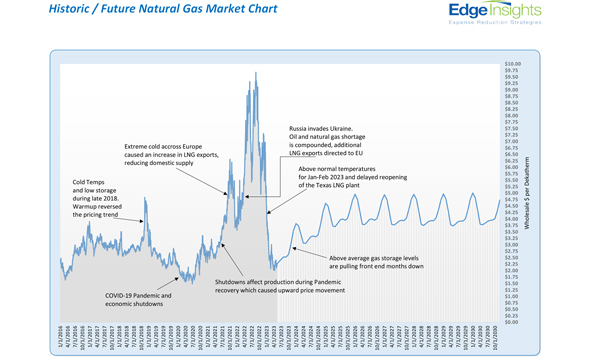
Energy is a volatile external variable that can suddenly erode profit margins. By recycling thermal energy internally, a plant reduces its total dependence on the local utility grid and natural gas supply. This self-sufficiency acts as a strategic hedge against sudden price spikes or supply chain disruptions.
The automotive manufacturing process is replete with opportunities for waste heat recovery. Identifying these sources and understanding how the recovered heat can be reapplied is key to successful implementation.
The paint shop is the heavy hitter when it comes to heat. After a vehicle is sprayed, it enters massive drying ovens where temperatures climb to 160–200°C (320-392°F). The exhaust air from these ovens, while carrying pollutants, is also incredibly hot. It’s usually vented out of the building. By installing air-to-water heat exchangers, you can intercept that heat and transfer the energy into a water circuit.
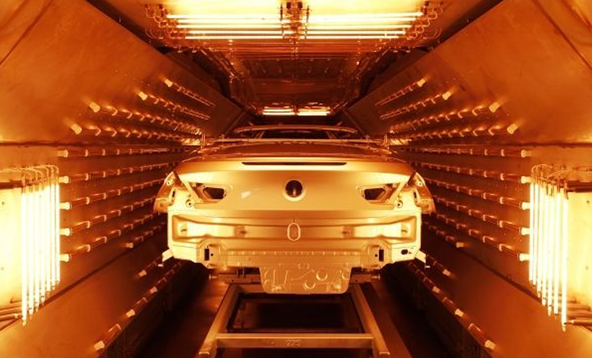
This heated water (60-90°C or 140-194°F) can then be used to preheat incoming fresh air for the ovens, reducing the need for primary burners. Or it can be used to supply heat for other processes like pre-treatment baths.
Engine testing is needed to ensure that every powertrain meets performance, durability, and emissions standards. During these high-stress testing cycles, internal combustion engines generate immense thermal loads. Exhaust gas temperatures frequently surge past 400°C (752°F), while the cooling systems must simultaneously reject massive amounts of heat to keep the engine from failing.
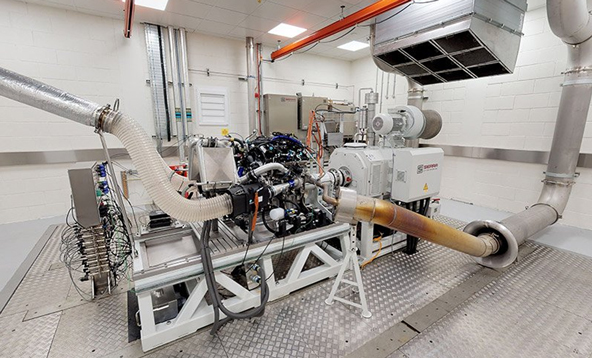
Air-to-water (ATW) systems can capture a portion of this heat to provide warm water for facility heating, domestic hot water, or even other low-temperature process requirements.
The most critical structural and mechanical components are created in the intense heat of the foundry. Foundries melt raw metals at temperatures often exceeding 1,500°C, which is poured into molds. Die-casting is used in the mass production of lightweight parts like EV battery housings. It involves molten metal being blasted into steel molds at incredible pressure.
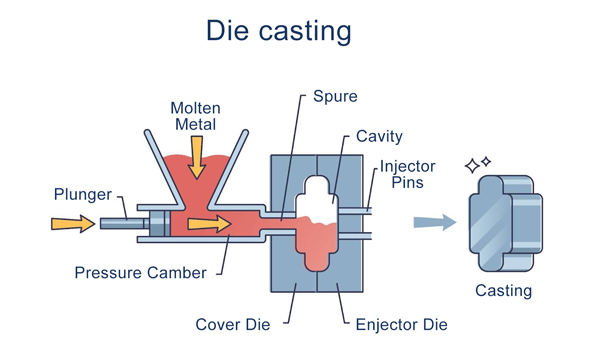
Because both processes require keeping metal in a liquid state around the clock, they generate massive amounts of exhaust reaching 800°C (1,472°F) or higher. While challenging due to the high temperatures and potential for particulate matter, industrial air-to-water systems can recover heat from furnace exhausts. This heat can be used to preheat combustion air for the same furnaces or generate steam for other industrial processes.
Even the facility’s central utility plant, which provides the steam and hot water needed for the entire assembly line, has untapped energy hidden in its exhaust. Most industrial boilers vent gases at temperatures between 150°C and 250°C (302-482°F). This heat has already done its primary job but still carries significant value. An economizer can recover this residual heat to preheat boiler feedwater, significantly improving boiler efficiency.
Venting high-grade thermal energy into the atmosphere is not defensible when waste heat recovery exists. You can turn exhaust into a long-term resource and most installations pay for themselves in less than three years. For the automotive industry, this makes production costs more predictable, while serving to reduce energy inputs and emissions.
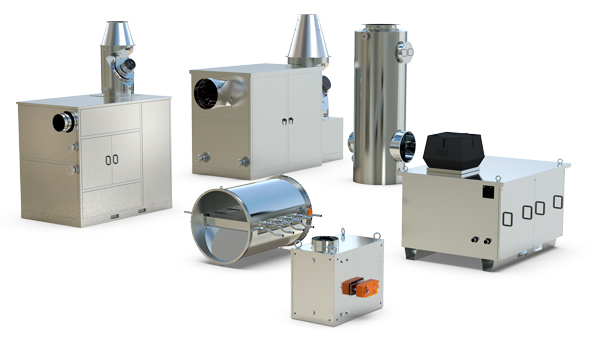
ENERVEX addresses these challenges through the PowerVex series – a line of high-efficiency air-to-water waste heat recovery units. Unlike traditional, bulky economizers, PowerVex is built around a modular micro-channel design that is compact enough for tight factory layouts while delivering 200% to 300% more energy savings.
To learn more visit ENERVEX.com or call us at 800-255-2923.